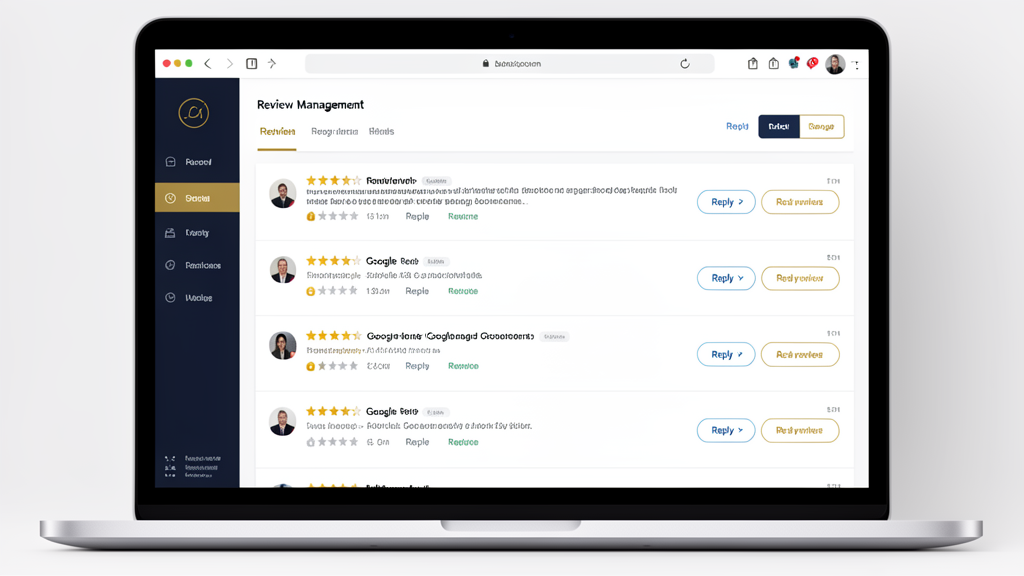
Google Review Automation for Local Business: The Complete Guide to Getting More 5-Star Reviews
Your business just finished a great job, the customer was thrilled, and then—nothing. No Google review shows up. A week later you can barely remember to ask, and the customer has already moved on with their life. This is the single biggest reason local businesses stay stuck at 12 reviews while a less-skilled competitor down the street sits at 140. It isn't a quality problem. It's a google review automation for local business problem, and it's completely fixable.
We agree that chasing customers for reviews feels awkward, and doing it by hand simply doesn't scale past your first few jobs a week. This guide breaks down exactly how automated review requests work, why timing and wording matter more than most owners realize, and how to stay fully compliant with Google's rules while you do it. You'll learn the three-message framework that turns a normal job completion into a steady stream of five-star social proof, without you or your staff lifting a finger.
By the end, you'll have a clear, pragmatic path from "we probably have some happy customers out there" to a Google Business Profile that actively closes new business for you, 24/7.
Key Takeaways
- Understand why "remembering to ask" fails at scale, and how google review automation for local business turns review generation into a system instead of a hope.
- Learn the exact 3-message sequence—check-in, request, reminder—that consistently outperforms a single generic ask.
- See why review gating (routing happy customers to Google and unhappy ones elsewhere) violates Google's policies, and how to stay compliant while still catching problems early.
- Discover how a one-time reactivation campaign against your past customer list can produce 40-75 new reviews in a matter of weeks.
- Find out how AI auto-responses to incoming reviews improve your local search ranking and make your business look more trustworthy to prospects scrolling Google Maps.
Why Your Inbox of Happy Customers Isn't Turning Into Reviews
Most local business owners assume a quiet Google Business Profile means they haven't done enough good work. That's rarely true. It usually means nobody asked at the right moment, in the right way. A customer who just had a great experience with your Memphis-area business is willing to leave a review—for about 48 hours. After that, the moment passes and life takes over. Google review automation for local business exists specifically to catch that window before it closes.
Think about your own last five great service experiences. Did you leave a review for all of them? Most people don't, not because they didn't care, but because nobody made it easy or timely. According to research on consumer review behavior, satisfied customers are far less likely to volunteer feedback than dissatisfied ones—which is exactly why an unprompted profile skews negative over time. If you're not actively asking, you're only hearing from the complaints.
For a business in Shelby County, this silence is expensive. A prospect comparing three providers in Bartlett, Germantown, or Cordova will almost always call the one with more, and more recent, five-star reviews first. Reviews aren't a vanity metric. They're the deciding factor between you and the competitor who simply asks more consistently than you do.
The "Remembering Problem," Not a Quality Problem
Owners forget to ask because they're mid-job. Staff forget because it's not their money on the line. Customers forget because they're busy. None of that means the work wasn't great—it means there's no system catching the moment. Google review automation for local business replaces "I should really ask for reviews" with a workflow that fires automatically every single time a job wraps up, whether you remember that day or not.
What a Quiet Profile Actually Costs You
If your average job is worth a few hundred to a few thousand dollars, the math is lopsided in your favor the moment automation produces even one extra job a month. A roofer landing a single $5,000 job from a review-driven Google search easily justifies the cost of running the system for a year. The real cost of doing nothing isn't visible on a P&L line—it's the customer who called your competitor first because their profile looked more active.
The 3-Message Framework Behind Google Review Automation for Local Business
Effective google review automation for local business isn't complicated, and it isn't a mass blast. It's three short, personal-sounding messages sent at the right intervals after a job completes. Skip any one of the three and your results drop noticeably—each message does a specific job the others can't.
Message 1: The Check-In (No Ask Yet)
The first message goes out right after job completion, and it isn't a review request at all. It's a simple, human check-in: "Hey [Customer], this is [Owner] from [Business]. Just making sure everything looks good with the work we did today." No link, no ask—just a real question.
This step does double duty. It opens a genuine conversation, and if something's actually wrong, you find out immediately instead of finding out publicly on Google a week later. Customers whose small issue got fixed fast often become your most enthusiastic five-star reviewers.
Message 2: The Review Request (Sent to Everyone)
Whether the customer replies to the check-in or not, message two follows a few hours later: a warm, first-name-to-first-name request with a direct link to leave a Google review. Using both names is what keeps this from reading like an automated blast—it's the detail that actually drives response rate.
This exact message and link go to every customer, no exceptions, regardless of what they said in the check-in. That consistency isn't optional—it's the compliance backbone of the entire system, covered in detail below.
Message 3: The Reminder (Most Skipped, Highest Yield)
If the system detects the customer hasn't clicked the review link within a few days, a single gentle reminder goes out: "Just a quick follow-up—if you haven't had a chance yet, we'd really appreciate a quick Google review." If they already left one, this message never sends. Skipping this step is the single most common mistake business owners make when they try to DIY review requests, because a large share of total reviews come from this reminder alone. People meant to do it and got busy.
Staying Compliant and Scaling Past Your First 10 Reviews
The single rule that matters most in google review automation for local business: never send different customers to different outcomes based on how they answered the check-in. Routing happy customers to Google and unhappy customers to a private feedback form is called review gating, and it's a direct violation of Google's review policies—one that can get a profile penalized or reviews removed entirely. Every customer gets the identical message and identical link. Full stop.
Once the day-to-day workflow is running, the fastest way to prove the system's value is a one-time reactivation campaign against your existing customer list—pulled from whatever you already use to track past jobs, whether that's invoicing software, a spreadsheet, or your CRM. Dripped out slowly (2-3 sends every 20 minutes during business hours, never a single blast) most businesses see an 8-15% conversion rate. For a business with 500 past customers, that's 40-75 new reviews inside the first few weeks—enough to take a profile from invisible to genuinely competitive in about a month.
AI Auto-Responses: From "Nice" to "Indispensable"
Google's local ranking algorithm favors businesses that actively respond to reviews, and prospects scrolling listings notice the difference between a business that engages and one that ignores every comment. Setting a short delay (10-15 minutes) before a personalized reply posts automatically to every incoming review keeps your profile looking active without requiring you to sit at a keyboard refreshing Google all day.
Built for Shelby County Service Businesses
As a veteran-owned, Memphis-based operation, we built this system for the same kind of business we are—lean, busy, and not interested in babysitting another dashboard. Whether you're a contractor in Arlington, a clinic in Collierville, or a shop in Lakeland, the system runs quietly in the background while you do the actual work. It's local accountability paired with a workflow that never forgets to ask, even on your busiest week of the year.
Turn Every Finished Job Into a Five-Star Review
You've already done the hard part—doing work good enough that customers would recommend you. Google review automation for local business just makes sure that goodwill actually shows up where new customers are looking. A three-message sequence, sent consistently and compliantly, is the difference between a Google profile that quietly exists and one that actively wins you the next call.
Memphis Web Solutions built the Google Review Generator specifically for local service businesses that don't have time to chase reviews by hand. It runs the check-in, the request, and the reminder automatically after every job, plus a one-time reactivation pass against your past customers to jumpstart your existing profile.
If you're tired of doing great work that nobody outside your customer list ever hears about, it's time to let your reviews do some of the selling for you.
Frequently Asked Questions
Is automating Google review requests actually allowed by Google?
Yes, as long as every customer receives the same request regardless of their feedback. What's not allowed is review gating—filtering unhappy customers away from the public review link while only pushing happy customers toward Google. A compliant google review automation for local business system sends the identical message and link to everyone, every time, with no exceptions.
How many reviews can I realistically expect from my past customer list?
Most businesses see an 8-15% conversion rate when they run a one-time reactivation campaign against an existing customer list, as long as it's dripped out slowly rather than blasted all at once. A business with a few hundred past customers can typically expect several dozen new reviews within the first few weeks of launching the campaign.
Won't customers realize the messages are automated and get annoyed?
The messages are written to read as personal, first-name-to-first-name texts from the actual business owner, not a corporate blast. Because the system only sends three total messages—and stops the reminder entirely once someone has clicked the link—most customers experience it as a normal, low-friction ask rather than spam.
Do I need a big customer list already for this to be worth it?
No. The system pays for itself off new jobs alone, since every completed job triggers the same 3-message sequence going forward. A past-customer reactivation campaign is a bonus accelerant if you have an existing list, but it isn't a requirement to start seeing new reviews from ongoing work.